Supreme Court to hear Delhi Police appeal opposing bail in 2020 riots UAPA case
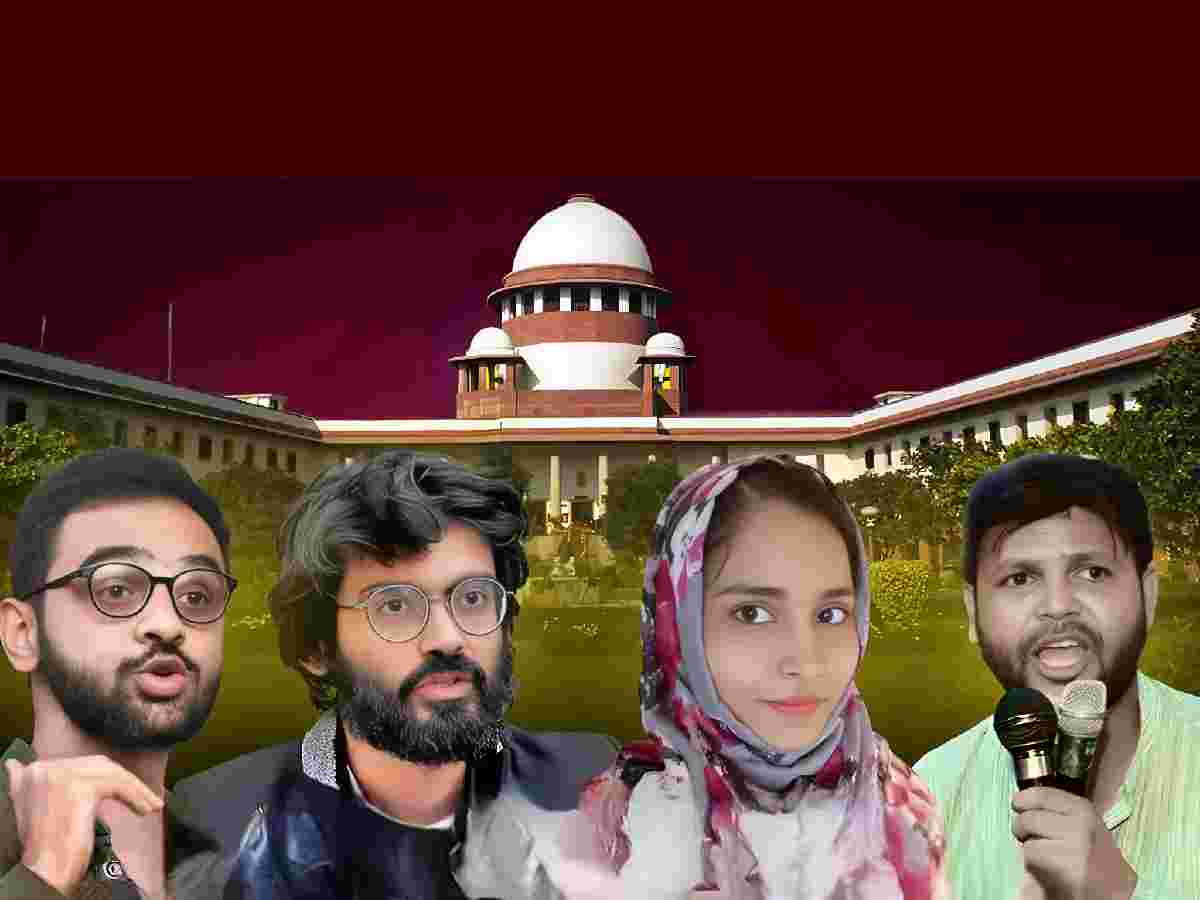
The Supreme Court continues hearing bail pleas of Sharjeel Imam, Umar Khalid and others in the 2020 Delhi riots conspiracy case. Delhi Police alleges “pre-planned and orchestrated violence.
The Supreme Court will on Monday resume hearing the bail pleas of student leaders Sharjeel Imam, Umar Khalid, Meeran Haider, Gulfisha Fatima and Shifa-ur-Rehman, all charged under the Unlawful Activities (Prevention) Act (UAPA) in connection with the alleged larger conspiracy behind the 2020 North East Delhi riots.
As listed on the apex court’s official causelist, a bench comprising Justices Aravind Kumar and N.V. Anjaria is set to continue hearing arguments from the Delhi Police, which opposes the bail requests.
During an earlier session, Solicitor General Tushar Mehta, appearing for Delhi Police, argued that the violence was not a spontaneous communal outbreak but rather a strategically planned assault on national stability. He asserted that evidence collected — including alleged speeches and WhatsApp conversations — suggested an organised attempt to create division.
Referring to Sharjeel Imam’s statement, Mehta told the court that Imam had purportedly called for widespread “chakka jam” protests. He further claimed that the chats seized during the investigation allegedly detailed plans regarding damage to property and mobilisation of funds, describing it as a “systematic” approach.
In Thursday’s hearing, Additional Solicitor General S.V. Raju presented video footage of Imam’s speeches and visuals from the riots, alleging a deliberate and coordinated effort to incite unrest.
The Delhi Police’s counter-affidavit also described Umar Khalid as a key conspirator, asserting that the events were timed with the official visit of then US President Donald Trump, allegedly to globalise the Citizenship Amendment Act (CAA) issue. Previously, the Delhi High Court had rejected the bail petitions of all the accused.
Analysis:This high-profile case will likely attract national and international attention due to its political and legal sensitivity. Legal experts suggest that the court’s decision may shape future interpretations of UAPA and protest-related cases. Regardless of the outcome, the proceedings underline the growing importance of digital evidence in judicial evaluation.