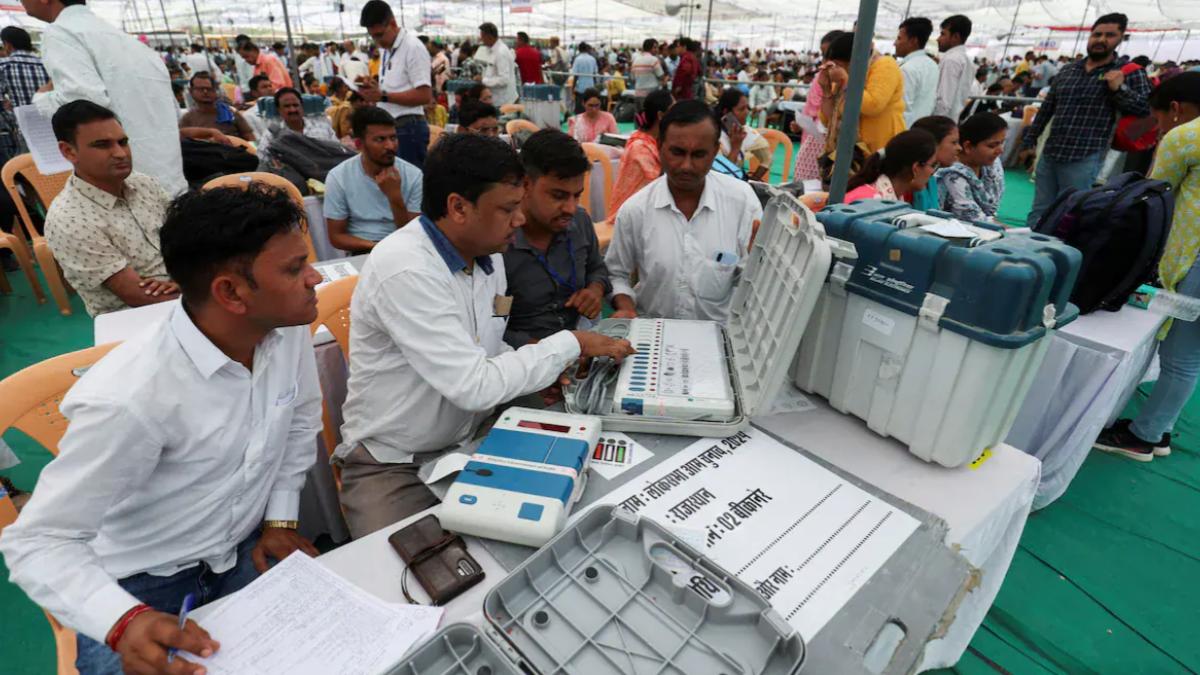
The Special Intensive Revision (SIR) of electoral rolls has been concluded in nine states and three Union Territories, with the Election Commission of India stating that the exercise was aimed at ensuring clean and accurate voter lists ahead of upcoming elections.
The revision process, which involves field verification, focused on removing names deemed ineligible due to death, permanent migration, duplicate entries or other statutory reasons, while simultaneously enrolling eligible new voters.
Gujarat reported the largest number of deletions in the country, with 68,12,711 names removed. The state’s electorate fell from 5,08,43,436 (around 5.08 crore) before the revision to 4,40,30,725 (around 4.4 crore) after the exercise a net decline of 13.40%, the steepest among the regions covered.
Madhya Pradesh followed with approximately 34 lakh deletions, marking the second-highest reduction. Across the 9 states and 3 UTs including Gujarat, Madhya Pradesh, Rajasthan, Chhattisgarh, Kerala, Goa, Andaman & Nicobar Islands, Puducherry and Lakshadweep the cumulative net decline stood at nearly 1.70 crore voters. In many areas, the average drop ranged between 7% and 8%.
At the other end of the spectrum, Lakshadweep recorded the lowest number of deletions, with just 206 names removed.
The poll panel has maintained that the revisions were carried out strictly as per legal provisions to enhance accuracy and ensure that no eligible voter was excluded. However, reports indicate that some activists have raised concerns regarding the scale of deletions in Gujarat, even as officials reiterate that the process was routine verification.
The sharp decline in certain states particularly Gujarat is likely to remain a subject of political debate. While the Commission projects the clean-up as a step toward stronger electoral integrity, the scale of deletions underscores the importance of continuous voter awareness and timely verification of enrollment status.