Sheikh Abubakr Ahmad Meets PM Narendra Modi, Raises Minority Welfare and Development Issues
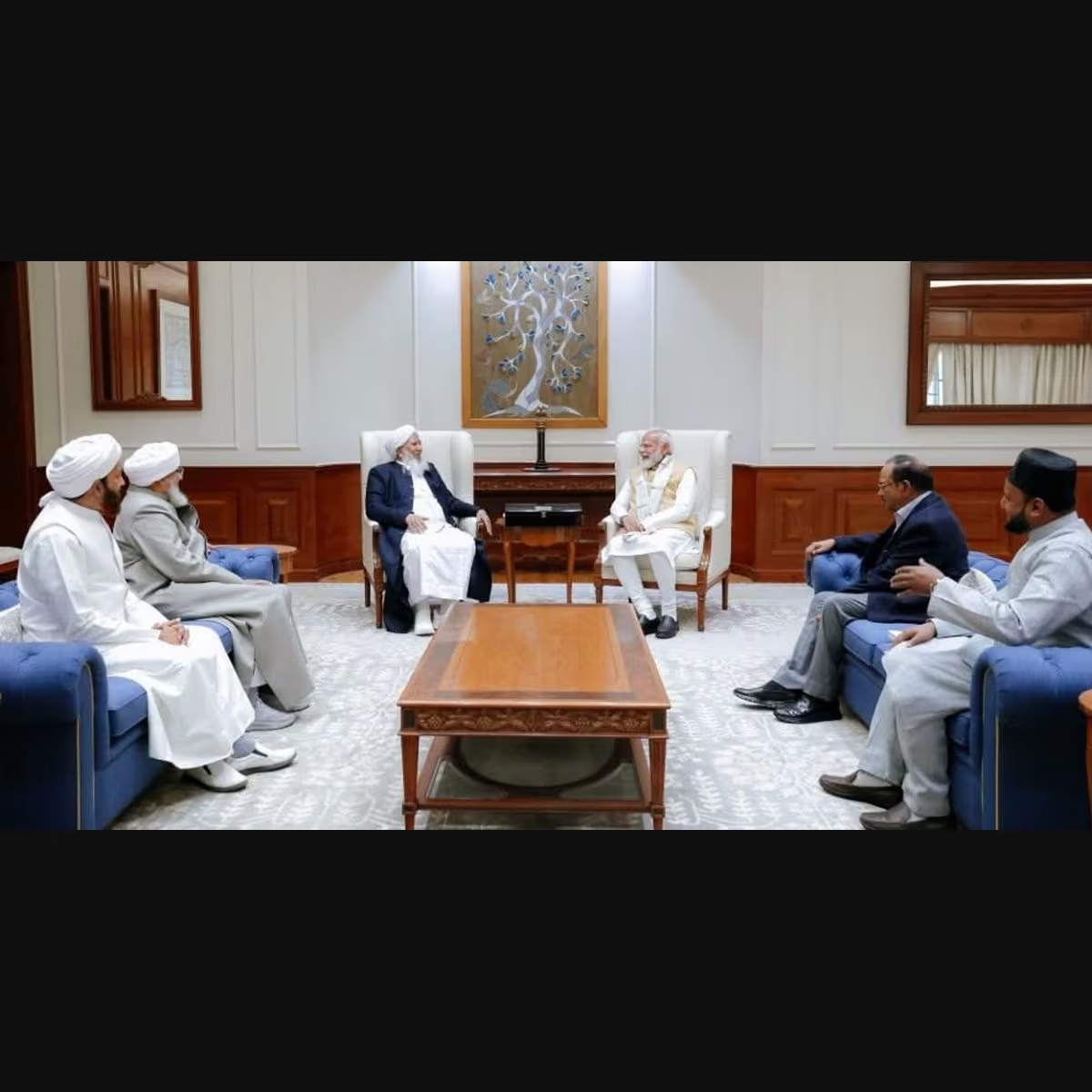
Sheikh Abubakr Ahmad met Prime Minister Narendra Modi in New Delhi to discuss minority welfare, inclusive growth, Waqf concerns and educational initiatives, along with broader national and international matters.
Prominent Islamic scholar Sheikh Abubakr Ahmad met Prime Minister Narendra Modi in New Delhi on Monday, engaging in what was described as a detailed conversation spanning social, humanitarian and educational concerns, along with key national and global developments.
During the interaction, the cleric presented issues gathered during his recent Kerala outreach programme themed “With Humanity.” He conveyed feedback from various communities and highlighted matters relating to minority welfare, equitable development and resource distribution. Concerns linked to Waqf administration, SIR-related issues, protection of historic mosques and Islamic heritage sites, and the reinstatement of minority-focused educational schemes—including the Maulana Azad National Fellowship—were among the points raised.
The discussion also touched upon justice-related matters, including reference to the Bareilly incident, and the challenges faced by certain Islamic institutions in North India such as Mubarakpur Jamia Ashrafiyya. Proposals like expanding train connectivity to major pilgrimage centres in South India and accelerating development at the Aligarh University Malappuram Centre were placed before the Prime Minister.
According to those present, the Prime Minister acknowledged the educational and welfare initiatives undertaken under the leadership of Jam’iyyathul Ulama and Jamia Markaz, noting that such efforts contribute positively to India’s global standing. He emphasised the broader theme of inclusive growth, suggesting that economic progress should move alongside improvements in human development and overall well-being.
Samasta Kerala Jam’iyyathul Ulama Secretary Sheikh Abdul Rahman Saquafi and Markaz Knowledge City Managing Director Dr. Muhammed Abdul Hakkim Azhari were also part of the delegation.
The meeting comes at a time when engagement between community leaders and the Centre is being closely watched. Observers say sustained dialogue could ease mistrust and ensure that development policies reflect ground realities. For minority institutions, consistent communication with policymakers may prove crucial in navigating regulatory and funding challenges in the years ahead.