Revanth Reddy and Nara Lokesh Meet at Davos, Stress Telugu-State Cooperation.
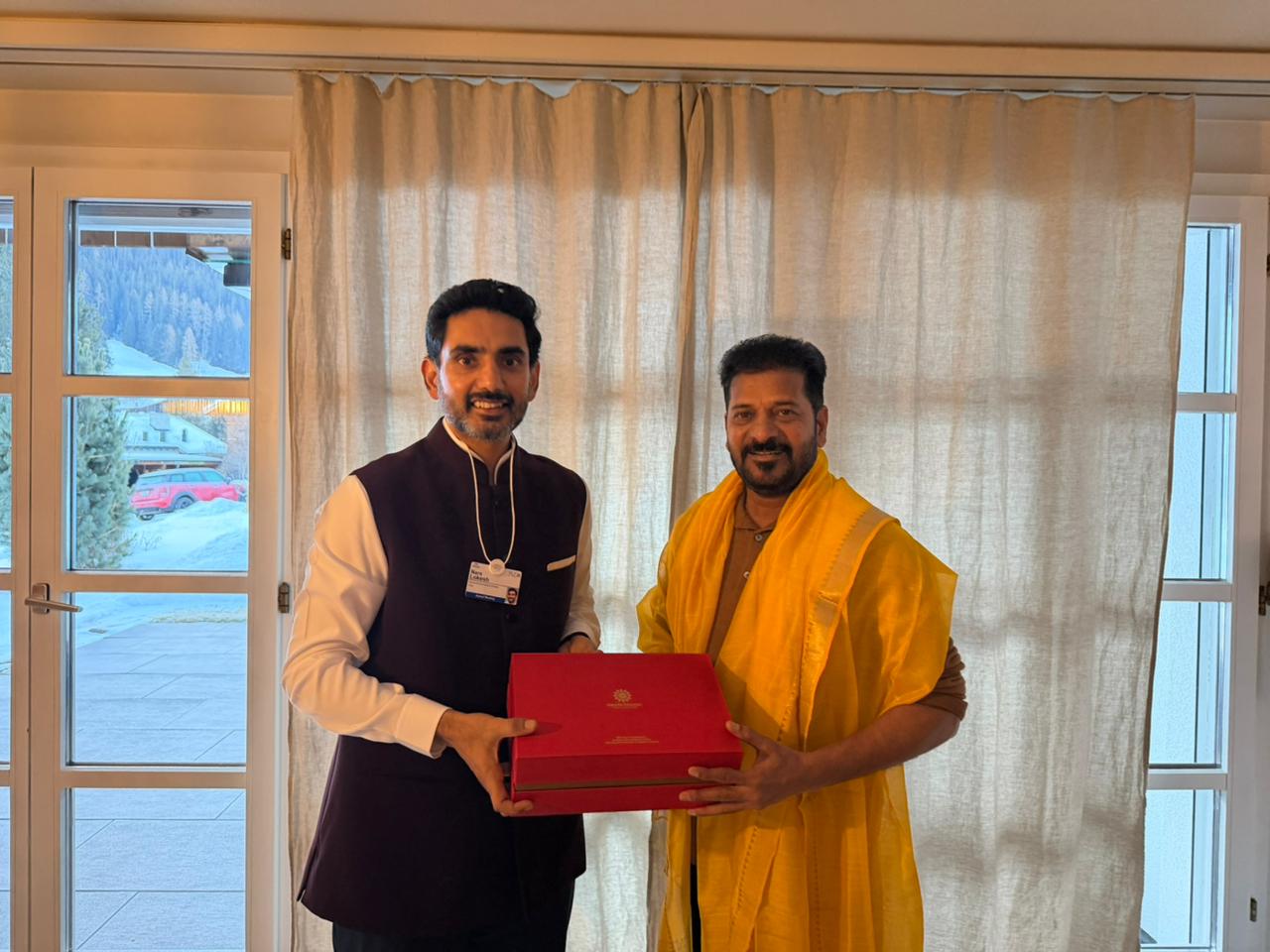
Telangana CM Revanth Reddy and Andhra Pradesh minister Nara Lokesh held a cordial meeting at Davos, focusing on education reforms, IT growth, and skill development.
A rare moment of cross-state bonhomie played out at the World Economic Forum (WEF) 2026 in Davos, where Telangana Chief Minister A. Revanth Reddy and Andhra Pradesh Minister Nara Lokesh held a warm and forward-looking interaction on the sidelines of the global summit.
The meeting, described by both sides as constructive, saw the two leaders exchange courtesies and discuss shared priorities, particularly in education reforms, information technology growth, and skill development. Lokesh felicitated the Telangana Chief Minister with a traditional Mangalagiri shawl and a memento, a gesture that was reciprocated by Revanth Reddy.
During the interaction, Revanth Reddy highlighted Telangana’s ongoing efforts to upgrade Industrial Training Institutes (ITIs) into modern skill campuses, developed in partnership with the Tata Group. He invited Lokesh to visit these facilities and study the model as part of broader skill-building initiatives.
Both leaders underlined that while Andhra Pradesh and Telangana may compete for investments, cooperation between the two Telugu-speaking states is essential to accelerate regional growth. They agreed that collaborative approaches in skilling, technology, and education could help position the combined region as a leading development hub in the country.
Lokesh later shared details of the meeting on social media, echoing the sentiment that healthy competition, backed by coordination, would benefit both states. The interaction has been widely viewed as a positive signal of cooperative federalism at a time when states are aggressively courting global investors.
The Davos meeting reflects a subtle shift from rivalry to pragmatic collaboration between Andhra Pradesh and Telangana. As both states push parallel agendas in IT, skilling, and innovation, coordinated learning and policy exchange could reduce duplication and speed up outcomes—an approach that may resonate well with investors looking for scale and stability in southern India.
