Lok Sabha Rejects Delimitation-Linked Constitution Amendment Bill; Govt Withdraws Key Bills
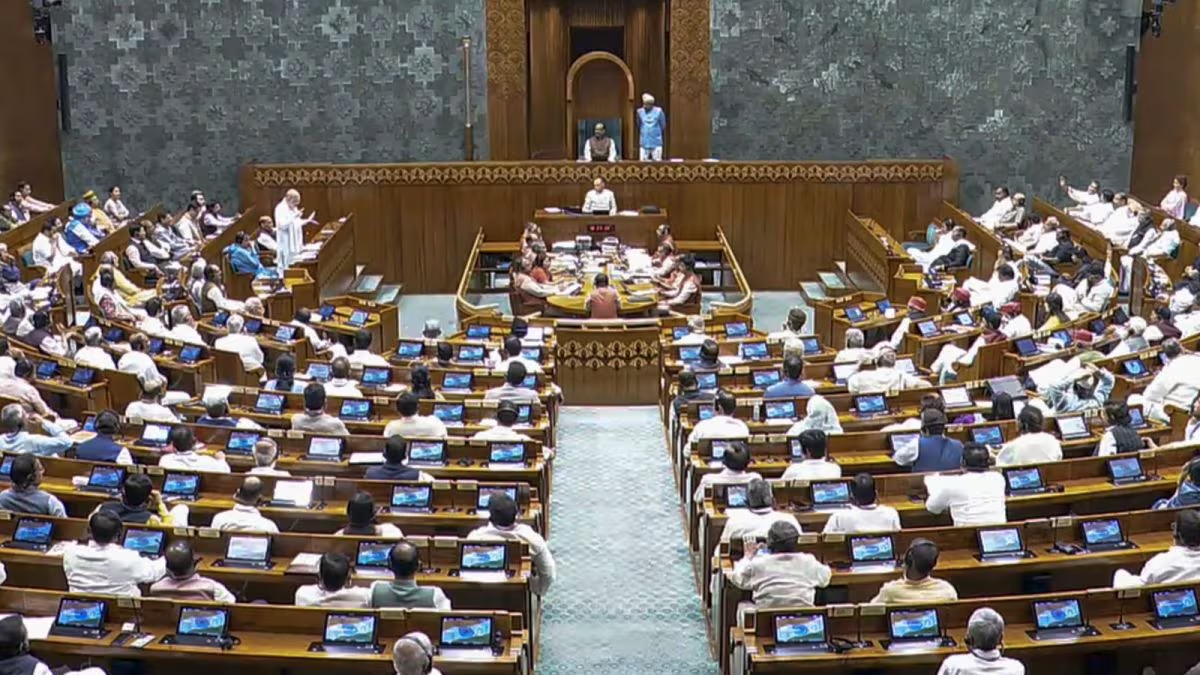
Lok Sabha rejects Constitution (131st Amendment) Bill after it fails to secure two-thirds majority; Centre withdraws Delimitation and UT amendment bills.
In a significant setback for the Centre, the Lok Sabha has rejected the Constitution (One Hundred and Thirty-First Amendment) Bill, 2026, after it failed to secure the required two-thirds majority. While 298 members supported the proposal, 230 opposed it, falling short of the constitutional threshold needed for passage.
Following the defeat, Union Minister Kiren Rijiju announced the withdrawal of the Delimitation Bill, 2026, along with the Union Territories Laws (Amendment) Bill, 2026, both of which were closely tied to the proposed changes.
The rejected amendment aimed to significantly expand the strength of the Lok Sabha from 543 to 850 seats and revise the framework for delimitation and implementation of women’s reservation. It also sought to allow constituency reorganisation based on the 2011 Census, removing the earlier requirement to wait until after the next Census cycle.
Opposition parties had strongly resisted the move, arguing that using older population data could disproportionately impact representation in southern and northeastern states. They also questioned the urgency of pushing delimitation reforms while a fresh Census process is underway.
The proposed framework included the creation of a Delimitation Commission to redraw parliamentary and assembly constituencies, as well as provisions to roll out one-third reservation for women immediately after delimitation, instead of linking it to a future Census.
Despite broad political support for women’s reservation in principle, disagreements over the method and timing of implementation ultimately led to the Bill’s defeat.
The outcome highlights the complexity of balancing electoral reforms with regional sensitivities. While the push for women’s representation remains strong, the debate suggests that consensus on delimitation—especially its timing and basis will be crucial before any major structural changes to India’s electoral system can move forward.
