Kavitha Demands Cancellation of TGPSC Group 1 Exams, Warns of Supreme Court Appeal
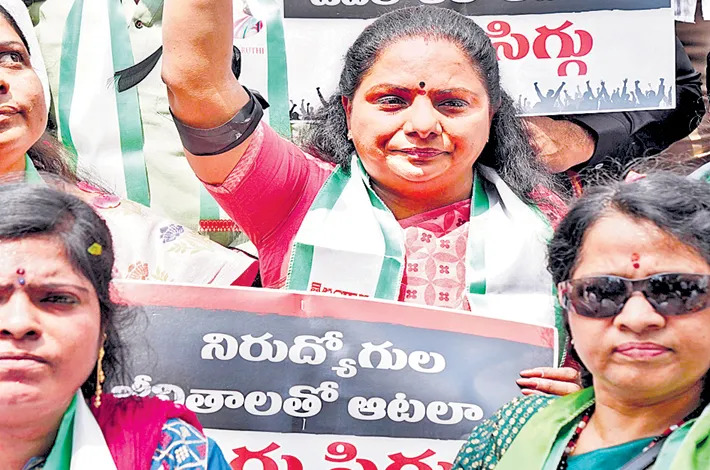
Telangana Jagruti president K. Kavitha protests demanding the cancellation and reconduct of TGPSC Group 1 exams, alleging irregularities and injustice to local candidates.
Hyderabad: Telangana Jagruti president Kalvakuntla Kavitha on Tuesday intensified her campaign against the Telangana State Public Service Commission (TGPSC), demanding that the Group 1 exams be cancelled and conducted afresh. Kavitha, along with Jagruti members, attempted to stage a demonstration at the Chikkadpally Central Library, but police prevented the group from entering the premises or interacting with students.
Speaking to reporters outside, Kavitha accused the state government of lack of transparency in recruitment and questioned the hurried issuance of appointment letters. “If the process was clean, why are officials hesitant to release the details of those who secured jobs?” she asked.
She further alleged violations of the Presidential Order, claiming that non-local candidates were selected over eligible local aspirants. Kavitha also said that Telugu and Urdu medium candidates were unfairly treated, adding that both the BRS and Congress governments have failed job seekers.
The former MP criticised the ruling Congress for failing to deliver on its promise of two lakh new jobs and accused it of merely recycling old vacancies. “Even after announcing a job calendar, they haven’t released a single new notification,” she said.
The Telangana High Court is set to hear petitions on the Group 1 exam on October 15, after earlier suspending an order directing re-evaluation of results. Kavitha stated that if the verdict does not favour the aspirants, she would move the Supreme Court to seek justice.
Analysis: Kavitha’s intervention adds a political edge to the ongoing legal and administrative tussle over the Group 1 recruitment process. The controversy underscores deep concerns about transparency and regional fairness in Telangana’s public hiring. For lakhs of job aspirants, the case’s outcome could redefine trust in one of the state’s most critical recruitment bodies.