India Sees 93,000 Government Schools Shut in a Decade as Enrollment Declines
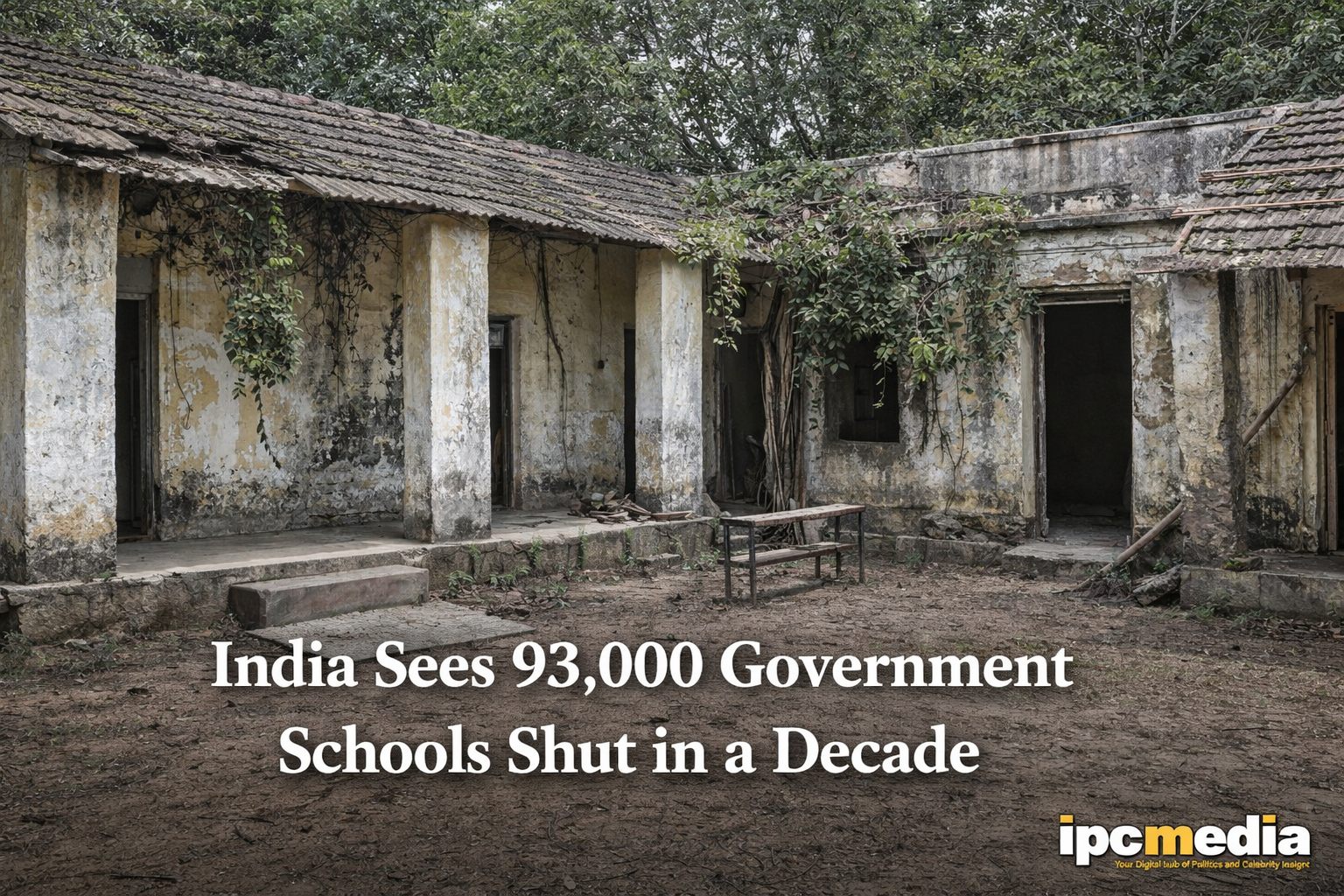
Government data tabled in Parliament shows a sharp fall in the number of government schools and student enrollment over the past decade, with officials citing demographic changes and rationalisation.
New Delhi: India’s public education landscape has undergone a significant shift over the past decade, with nearly 93,000 government schools closing between 2014–15 and 2023–24, according to data shared in Parliament by Minister Jayant Chaudhary.
The number of government schools declined from 11.07 lakh in 2014–15 to 10.17 lakh in 2023–24. States such as Madhya Pradesh and Uttar Pradesh accounted for a substantial portion of the reduction, with roughly 30,000 and 25,000 closures respectively.
At the same time, student enrollment has shown a downward trend. After reaching a peak of 26.06 crore in 2015–16, enrollment figures fell to 24.69 crore by 2024–25. Officials have linked the contraction partly to demographic changes, noting a decline in India’s fertility rate from 2.2 to 2.0, resulting in fewer school-age children.
The government has described the closures as part of a rationalisation process, merging or shutting down institutions with very low attendance to optimise resources and improve efficiency. Despite the reduction in absolute numbers, gross enrollment ratios at the primary level remain close to 90%, suggesting that most eligible children are still attending school.
However, critics argue that consolidation may disproportionately affect rural and remote communities, where the closure of a nearby school can mean longer travel distances and higher dropout risks. Data also indicates that the proportion of India’s population enrolled in schools has declined from 20.7% in 2015 to 16.8% in 2025—a nearly 19% drop over a decade.
Analysis: While demographic shifts offer part of the explanation, the scale of school consolidation raises questions about accessibility and long-term equity. For families in sparsely populated areas, even minor logistical changes can influence whether children stay in school. Policymakers may need to balance efficiency with on-ground realities to ensure that educational access is not unintentionally narrowed. This assessment reflects analytical opinion; all factual details above are drawn from the original content.