EU–India Free Trade Pact Sealed, Opening New Era for Exports and Investments
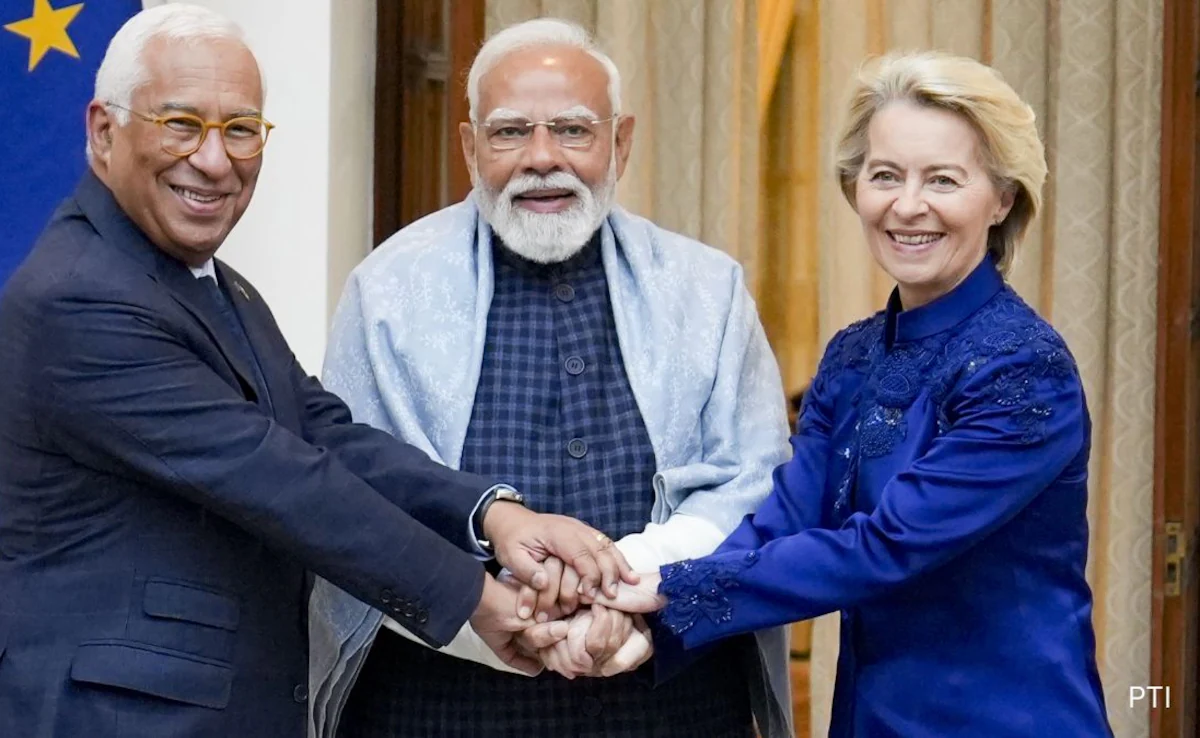
India and the European Union conclude a landmark FTA, unlocking vast export opportunities, job creation, and deeper investment ties across key sectors.
India and the European Union on January 27 concluded negotiations on a sweeping Free Trade Agreement, marking one of the most significant trade deals New Delhi has signed to date. Finalised during the India-EU Summit, the pact links two economies that together account for roughly a quarter of global GDP.
The agreement promises preferential market access for the overwhelming majority of Indian exports to Europe, offering either zero or sharply reduced duties. Labour-intensive industries such as textiles, garments, leather, marine products, and gems and jewellery are expected to be among the biggest beneficiaries, alongside automobiles and high-value manufacturing.
Industry bodies have described the deal as a strategic breakthrough, arguing it could sharply lift export competitiveness and draw fresh European investment into India’s manufacturing and clean-energy ecosystem. For European firms, the pact provides early-mover advantages in one of the world’s fastest-growing large markets.
Beyond trade numbers, the timing is politically and economically significant. With global supply chains under strain and protectionist pressures rising elsewhere, the FTA offers India a hedge and a chance to diversify markets. As Prime Minister Narendra Modi has indicated earlier, such agreements are increasingly being framed not just as trade tools, but as long-term growth partnerships.
If implemented smoothly, the deal could reshape India-EU economic ties for decades—though its real impact will depend on how quickly businesses adapt and governments translate commitments into on-ground outcomes.