BJP Slams Akhilesh Yadav Over Deepotsav Remarks, Calls Him ‘Anti-Sanatan’
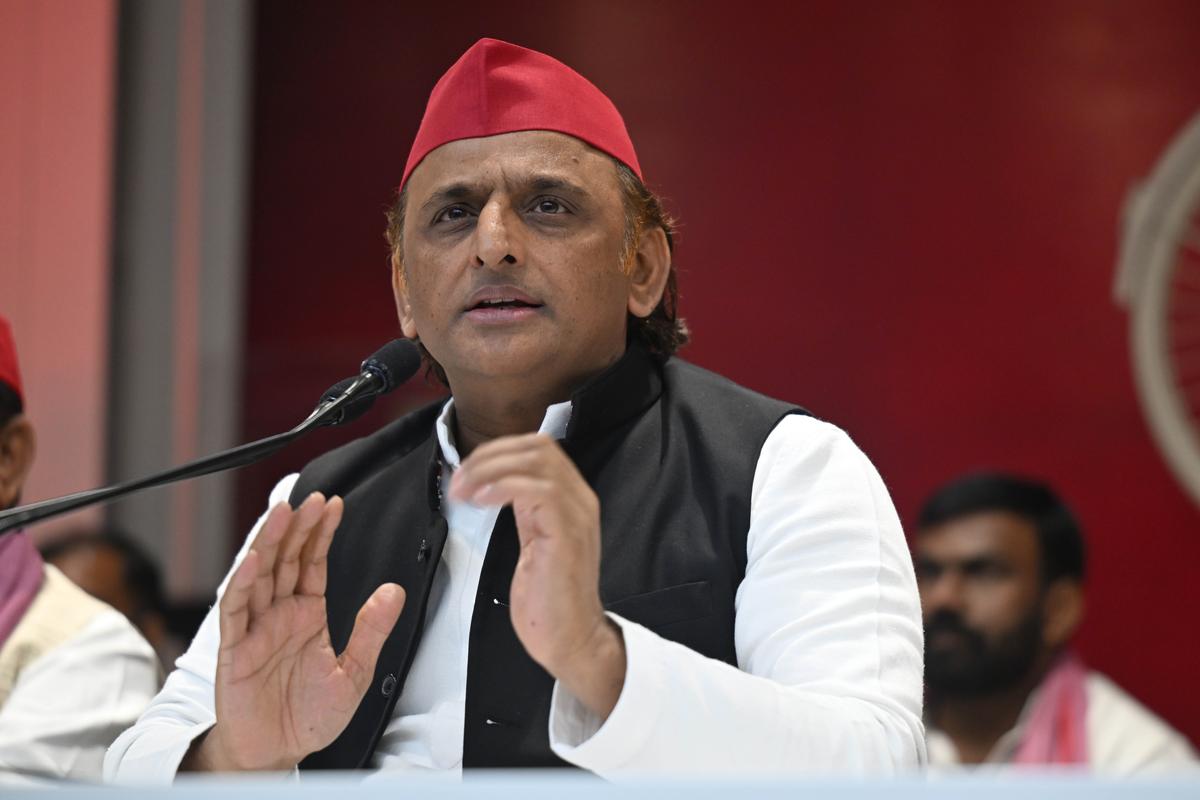
The BJP hits out at Samajwadi Party chief Akhilesh Yadav for questioning Ayodhya’s Deepotsav celebrations, accusing him of appeasement politics and disrespecting Hindu traditions.
The Bharatiya Janata Party (BJP) has launched a strong counterattack on Samajwadi Party (SP) chief Akhilesh Yadav for his recent comments on Ayodhya’s Deepotsav celebrations, accusing him of disrespecting Hindu beliefs and traditions.
Yadav had questioned the Uttar Pradesh government’s expenditure on lighting diyas during the annual Ayodhya event, suggesting that the state could take cues from how cities worldwide celebrate Christmas. His comments drew immediate backlash from BJP leaders, who said he was “insulting Indian culture” in pursuit of vote-bank politics.
UP Deputy Chief Minister Keshav Prasad Maurya, in a post on X, urged Yadav to “stop insulting the Hindu faith for appeasement.” He said lighting lamps is an ancient Indian tradition symbolising faith, peace, and unity, and accused the SP leader of “hurting the livelihoods of the Prajapati community,” which makes and sells clay diyas. Maurya demanded an immediate apology and withdrawal of Yadav’s remarks.
Echoing this, UP BJP president Bhupendra Singh Chaudhary labelled Yadav “anti-Sanatan,” saying his mindset repeatedly shows contempt for Hindu customs and rituals. “After mocking traditions, he is now targeting the festivals that embody our culture,” Chaudhary said.
BJP spokesperson Sudhanshu Trivedi went a step further, claiming that Yadav had become “blinded by the pursuit of votes from fundamentalist groups,” to the point of “speaking against his own community.”
Analysis: The controversy highlights how religious symbolism and electoral politics often collide in Uttar Pradesh. For the BJP, Deepotsav represents cultural pride and continuity; for its critics, it raises questions about state spending and political spectacle. While Yadav’s remarks may resonate with sections seeking fiscal accountability, they risk alienating traditional Hindu voters—especially artisans like the Prajapatis, whose livelihood depends on festive sales. As the state inches closer to another election season, such debates are likely to sharpen the divide between faith-based politics and governance discourse.